Introduction
Why This Matters
Most people know the heart is important. Far fewer understand that the real “control system” of cardiovascular health is not just the heart itself — but the condition of the blood vessels that feed every organ, muscle and cell in the body. And an organ you probably never heard of.
As we age, this system gradually changes. Arteries become less flexible. Blood flow can become less efficient. Energy may decline. Recovery slows. Circulation becomes less responsive.
Many people assume this is simply “getting older.”
But this is only partly true.
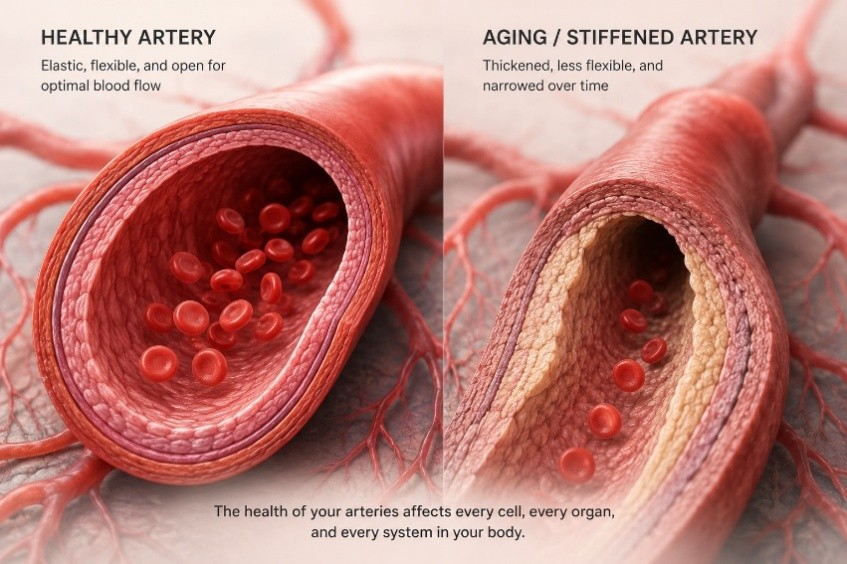
Modern cardiovascular science shows there is a deeper biological process involved — one that revolves around a remarkable substance called nitric oxide and a thin, delicate lining (the organ I spoke about), inside your blood vessels called the endothelium.
Understanding this system may help explain many of the changes people experience after the age of 40.
Chapter One
Your Cardiovascular System: More Than Just a Pump
The heart is often compared to a pump — and that’s true.
But no pump can function efficiently without healthy pipes.
Your cardiovascular system contains an estimated 60,000 to 100,000 kilometers of blood vessels.
Healthy circulation affects:
- Heart function
- Brain performance
- Energy production
- Physical stamina
- Recovery and healing
- Muscle performance
- Temperature regulation
- Sexual health
- Cognitive clarity
- Overall vitality and wellbeing
For decades, cardiovascular health discussions focused heavily on cholesterol and arterial blockage alone. While those factors matter, researchers now understand that the health of the blood vessel lining itself plays a critical role in vascular function.
That lining is called the endothelium.
Chapter Two
Meet the Endothelium: Your Body’s “Invisible Organ”
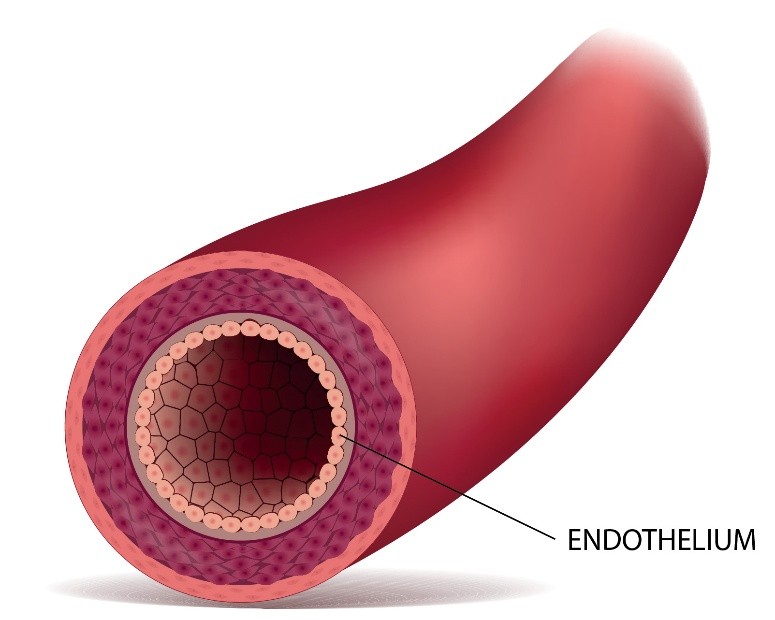
The endothelium is an ultra-thin layer of cells lining the inside of every blood vessel in your body.
For many years, scientists believed it was simply passive “wallpaper” inside arteries.
They were wrong.
Today, the endothelium is considered one of the body’s most important regulatory systems. Some researchers even describe it as a functioning organ due to its widespread influence throughout the body.
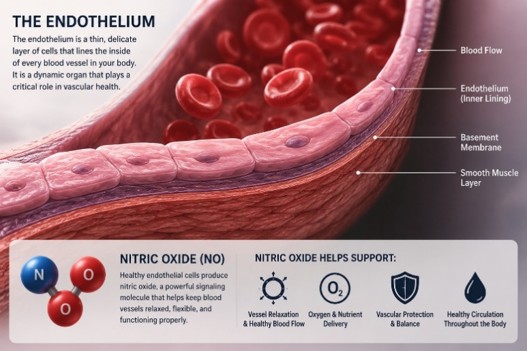
The endothelium helps regulate:
- Blood vessel relaxation and constriction
- Blood flow
- Oxygen delivery
- Circulation efficiency
- Inflammatory signaling
- Platelet activity
- Nutrient transport
- Communication between blood and tissues
When healthy, the endothelium helps arteries remain flexible, responsive and smooth.
When damaged or impaired, blood vessels can become stiffer and less efficient over time.
Chapter Three
The Discovery That Changed Cardiovascular Science
One of the most important discoveries in modern cardiovascular research occurred in the late 20th century.
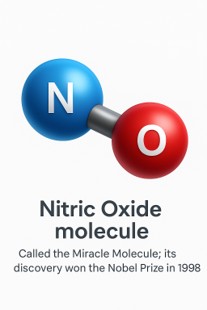
Scientists discovered that the endothelium produces a tiny signaling molecule called nitric oxide (NO).
This discovery fundamentally changed scientific understanding of vascular health.
Prior to this discovery, nitric oxide was largely considered an environmental pollutant or toxic gas.
Scientists later discovered the body actually manufactures it continuously for vital biological functions.
Chapter Four
What Nitric Oxide Actually Does
Nitric oxide is produced naturally by the endothelium and helps signal blood vessels to relax.
This process supports healthy circulation and vascular responsiveness.
In simplified terms, nitric oxide helps arteries remain more flexible and adaptable to changing blood flow demands.
Healthy nitric oxide production is associated with:
- Normal blood vessel function
- Efficient circulation
- Healthy oxygen delivery
- Exercise performance
- Recovery and endurance
- Healthy endothelial function
- General cardiovascular wellness
Nitric oxide is short-lived and produced continuously by the body when conditions are favorable.
Chapter Five
Why Nitric Oxide Production Declines With Age
Research suggests nitric oxide production tends to decline as people age.
Multiple factors may contribute, including:
- Oxidative stress
- Sedentary lifestyle
- Poor diet
- Excess body fat
- Smoking
- Alcohol
- Chronic stress
- Reduced physical activity
- Metabolic dysfunction
- Normal aging processes
Some researchers estimate nitric oxide production may decline significantly over the decades after early adulthood.
This decline may contribute to changes often associated with aging:
- Reduced circulation efficiency
- Lower exercise capacity
- Slower recovery
- Reduced physical performance
- Less vascular flexibility
- Lower perceived vitality and energy
Importantly, these changes are not always immediately noticeable. They often occur gradually over many years.
Chapter Six
Arteries and Aging
Healthy arteries are flexible and responsive.
Over time, arteries may gradually become:
- Less elastic
- More rigid
- Less responsive to circulation demands
- More prone to endothelial dysfunction
This process can affect how efficiently oxygen and nutrients are delivered throughout the body.
Think of healthy arteries like flexible garden hoses that adjust smoothly to changing flow demands. With aging and endothelial stress, arteries may behave more like stiff pipes.
This is one reason vascular health is now viewed as deeply connected to overall wellbeing and healthy aging.
Chapter Seven
Exercise, Movement & Nitric Oxide
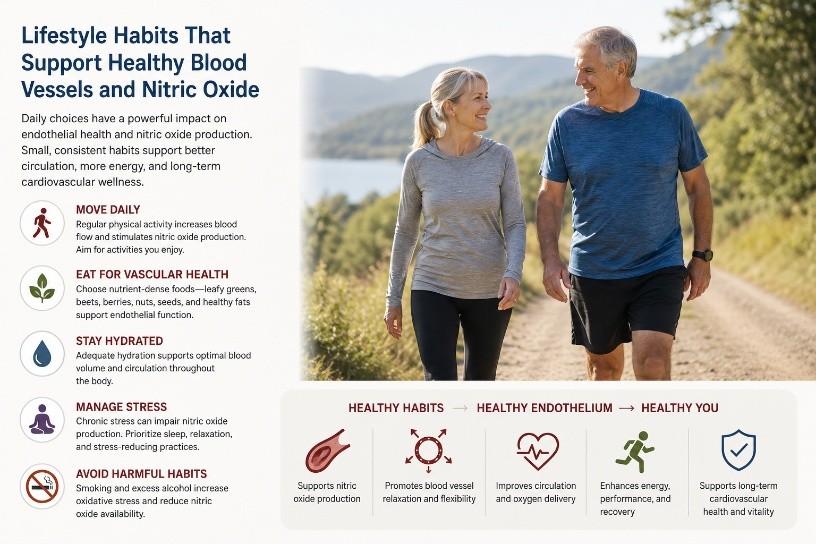
One of the most powerful natural stimulators of nitric oxide production is physical activity.
Movement increases blood flow across artery walls, which helps stimulate endothelial function.
Activities commonly associated with healthy endothelial support include:
- Walking
- Moderate cardio exercise
- Resistance training
- Stretching and mobility work
- Interval-style activity
- General daily movement
Even relatively modest improvements in activity levels may positively influence vascular function over time.
Chapter Eight
Nutrition & Vascular Health
Researchers have also explored how certain foods and nutrients may support nitric oxide pathways and endothelial health.
Areas of interest include:
- Leafy green vegetables
- Beetroot and natural nitrates
- Amino acids involved in nitric oxide pathways
- Antioxidant-rich fruits and plant compounds
- Polyphenols and flavonoids
- General anti-inflammatory dietary patterns

Nutrition alone is not a magic solution, but vascular health appears strongly influenced by long-term lifestyle patterns.
Chapter Nine
The Bigger Picture: Why This Matters Beyond the Heart
One of the most important shifts in modern health science is the growing understanding that circulation affects nearly every system in the body.
Your cardiovascular system is not isolated.
Efficient blood flow influences:
- Brain function
- Muscles
- Energy systems
- Hormone transport
- Organ function
- Recovery processes
- Cellular communication
That’s why vascular health is increasingly viewed as a foundational component of healthy aging and overall vitality.
Chapter Ten
What Researchers Continue to Explore
Nitric oxide and endothelial science remain active areas of research worldwide. Over the past two decades or so there have been well over 100,000 studies completed. Nitric Oxide may well be the most studied molecule in the medical world.
Scientists continue studying how vascular function may influence:
- Healthy aging
- Exercise physiology
- Endurance and recovery
- Cognitive performance
- Metabolic health
- Circulatory efficiency
- General wellness and vitality
While research continues evolving, one principle has become increasingly clear:
Healthy blood vessels, themselves, matter far more than most people realize.
Summary
Key Takeaways
- 01The endothelium is a critical regulator of vascular health
- 02Nitric oxide helps support healthy blood vessel function
- 03Nitric oxide production may decline with age
- 04Lifestyle factors strongly influence endothelial health
- 05Circulation affects the entire body, not just the heart
- 06Exercise, movement and nutrition play important roles in vascular wellness
Closing
Final Thoughts
Many people spend years focusing only on symptoms of aging without understanding some of the deeper biological systems involved.
Modern cardiovascular science suggests that maintaining healthy vascular function may be one of the most important long-term wellness strategies available.
The encouraging news is that lifestyle habits, physical activity, nutrition and emerging research into endothelial health are helping people better understand how to support healthy circulation and vitality as they age.
Supporting your body’s natural nitric oxide production, along with maintaining a healthy heart and cardiovascular system, can also be assisted by effective supplementation. Researchers have identified specific compounds that may help stimulate the endothelial nitric oxide synthase (eNOS) enzyme — the very mechanism your body uses to generate nitric oxide naturally.
One formulation that has drawn attention in this area is ėNOS. It is designed to work with the body’s own biology by supporting the eNOS pathway, rather than forcing artificial vasodilation. Its ingredients are selected for their documented roles in vascular research, including support for endothelial function, healthy circulation, and the natural nitric oxide production process.
For those interested in the science of vascular health, formulations like ėNOS represent a thoughtful approach to supporting the same systems described throughout this report — not as a replacement for healthy habits, but as a complementary strategy built on the same biological principles.